
AKIPRESS.COM - 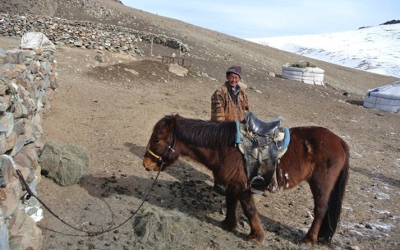 It has been a harsh winter in Mongolia following an especially dry summer – a weather pattern unique to the country and known here as a dzud – decimating tens of thousands of livestock and prompting the Mongolian government this week to formally launch a dzud appeal, seeking foreign aid, for the first time in six years, said The Prince George Citizen.
Temperatures have dipped as low as -46°C (-51°F), about 16°C (29°F) lower than normal. Snowfall in some mountainous areas reached 70 centimeters.
"Compared to recent years, this is unusually cold. It's had big effects on herding lifestyles," Togoo said.
The summer drought meant that cattle had less to graze on, failing to fatten up sufficiently before winter. In addition to those that have died, many of the survivors are so thin that their meat is not of high enough quality to sell if they perish, Togoo said.
Mongolia's government announced its dzud appeal on Tuesday. This winter is worse than the last dzud in 2009-2010, and a greater part of the country is affected. Only 45,000 livestock have died so far this year compared to the 9.7 million attributed to the 2009-2010 winter, but the vast majority of losses typically take place in the spring before the grass grows back in May.
The Asian Development Bank is contributing US$3 million in assistance toward local infrastructure and risk management plans, including helping districts prepare shelters for herders, as well as emergency training.
Further assistance is coming from Red Cross societies of Britain, Japan and Finland, said Purevjav Jambalragchaa, a coordinator with the Mongolian Red Cross Society.
Many herders are struggling to supply themselves with food because the snow is often too thick for horses or motorbikes to pass through. The Red Cross Society is preparing donations of food and cash, including $160,000 of aid coming in from abroad.
In a largely nomadic country where animals provide meat, dairy and textiles, it is difficult to lose so much livestock.