
AKIPRESS.COM - 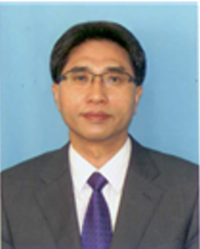 Japanese Deputy Foreign Minister Akitaka Saiki contributed an article denouncing President Park Geun-Hye’s standpoint on Japan as a major obstacle to ROK-Japan summit talk in a journal of The Society for Promotion of Japanese Diplomacy, the content of which is not disclosed to the public (Jan. 31).
By Back Tae Hyeon,
Professor at Faculty of Oriental Studies and International Relations of Bishkek Humanities University
As seen in President Park Geun-Hye’s speech commemorating the March 1st Independence Movement Day, the ROK government’s policy toward Japan aims at sharing the same value and understanding as well as closely cooperating for peace and prosperity of Northeast Asia.
Japanese Prime Minister Shinzo Abe, however, has continued to provoke the ROK in terms of historical and territorial issues by making inappropriate remarks on the comfort women and claiming dominium over the Dokdo islets, thereby severely downgrading the diplomatic relations between the ROK and Japan since his inauguration in Dec. 2012.
Behind Japan’s provocation lies its nostalgia for past militarism, with its national goal having diverted from the pursuit of ‘strong economy’ in the 20th century to ‘strong Japan’ in the 21st century.
Also, Japan’s seeking to cause a conflict with China is aimed to gain US support amid the process towards the G2 regime, thereby trying to exert more influence in the international arena.
In a bid to strengthen his political footing by portraying himself as a ‘conservative who fulfills his promises’, Abe also strives to stimulate mass psychology.
Japanese government’s recent move to reverify the Kono Statement regarding comfort women is an unscrupulous act equivalent to rubbing salt in the wounds, which clearly shows Japan’s utter inconsiderateness to the victims.
Former Japanese cabinet’s ‘sincere apologies’ and his promise ‘to take the facts as lessons of history’ were made in vain by Abe, and his decision only produces the image of ‘an untrustworthy country’ for Japan.
As Japan met by strong protests from other nations, the government claimed that it is not planning to revise but re-examine the statement. But re-examination basically has the same effect as revision as it will tarnish the spirit of Kono Statement.
Even the Yasukuni shrine issue is not just a matter of Japan’s own but an international issue that concerns all countries victimized by Japenese colonization, as some who are enshrined are those who played key roles in Japan’s aggression and colonialism.
Japan’s argument that Yasukuni visit is a ‘pledge against war’ is only a poor justification of former Prime Minister Yasuhiro Nakasone’s official visit to the shrine (Aug. 1985) as the country was met by fierce protests from its neighbors.
Pledging against war while paying respect to A-class wartime criminals is an antinomic act. It is also a self-contradictory for Japanese rightists who justify the country’s war of aggression.
The international community agrees that the strained ROK-Japan relations is attributable to Japan’s distortion of history. Therefore, it is a challenge to the international community for Japan to continue to provoke the ROK with past affairs.
The Japanese government argues that the two sides hold a bilateral summit without making any sincere changes in its attitude, which shows that it does not truly have the will to improve bilateral relations. It must consider who will ultimately have to pay more price if the status quo were to continue.
To turn the situation around to its favor, Japan has been trying to persuade the US, engaging in a war of public opinion with China, and increasing ODA towards Southeast Asian countries. However, incurring such unnecessary costs will only cause serious damage to Japan’s national interests.
In order for Japan to maintain its status in the region at a time when the world order is being rearranged with the rise of China, it first needs to remove obstacles internally, i.e. voluntarily resolve conflicts surrounding its past affairs.
Back Tae Hyeon, Doctor of History, Professor at Faculty of Oriental Studies and International Relations of Bishkek Humanities University (Visiting Professor of The Academy of Korean Studies).