
AKIPRESS.COM - 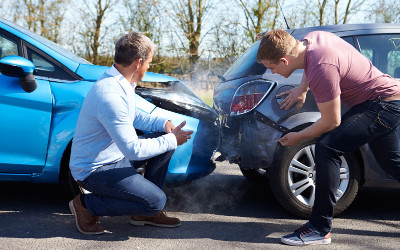 How does safety begin on the roads? What do statistics say? What are economic losses from road accidents for one year? These issues were examined by several experts upon the initiative of the National Institute for Strategic Studies (NISS).
Road Safety – Challenge of Today
By Chynara Kasmambetova, Andrei Dogadin and Jyrgalbek Sharshenbiyev, external experts
According to the World Health Organization (WHO), Kyrgyzstan is on the second place among countries of the European region – the country has been added to this segment – with 19.2 people in 2010 and 19.3 people in 2012 death rate per 100,000 population.
Injuries on the roads of the European region are the leading cause of death for the age group from 5 to 29 years. Every year, child mortality reaches 3-4.5 thousands, whereas children under 14 make 30% of this amount. During the last 10 years (2004-2013), 61,580 people were injured and 10,167 people died because of 45,518 road accidents in Kyrgyzstan. Death toll of more than 10,000 people is comparable to extinction of a whole village in the country. Many young people, both men and women, seniors and children are among these rates.
During the last 5 years (2009-2013), 5,433 road accidents involved children causing injuries in 5,773 children and deaths of 6,222.
Passenger children have become victims of other drivers but quite often are victims of their own parent drivers. Pedestrians are the most vulnerable participants of road traffic: every year 40-44% of them die. Being a pedestrian today is dangerous.
Statistics of previous years indicate that drivers are guilty of 80% of road accidents. Every day, one may see drivers and pedestrians violating road regulations on a large scale. Speeding is most frequent violation of traffic safety rules.
In 2013, 114,400 violations on speeding were detected; 106,941 violations on maneuvering, insubordination to demands of road signs and illegal parking; 78,307 violations on the use of cell phones while driving.
1,217 people (including 141 children) died, and 10,738 people (including 1,399 children) were injured in road accidents in 2013. It means that every day 3 people are dying because of road accidents. This has become one of the worst indicators for the last 13 years since 2001. Unfortunately, these indicators have a negative tendency for growth from year to year.
Motorization in Kyrgyzstan is an active process as it is typical in all other countries. According to non-official information, quantity of automobiles in Kyrgyzstan has exceeded 1 million vehicles. In this regard, according to a world expert studying road safety issue in Kyrgyzstan and designing the national strategy project, road safety situation in Kyrgyzstan is becoming the most serious problem, and is one of worst in the world.
Lost lives are behind all these figures, and the country thus lost future potential in human lives, which inflicts severe damage on the country's budget.
Within the framework of the study, a method was designed for the first time enabling to make projections for damage assessment from road accidents for each defined year taking into consideration GDP.
Material damage caused by deaths or injuries of people is the most significant portion of damages from road accidents: dropout of personnel from manufacture; payments for disability pensions and pensions for the loss of breadwinner; payments for treatment and temporary disability; deaths of children.
Besides, loss of vehicles, road infrastructure damages, elimination of the consequences of road accidents, charges of traffic police and legal offices for investigation of road accidents, costs for medical establishments’ services; losses of employers who have to pay for employees' being on sick-leave; expenses on social security (pensions) and insurance payouts affect the budget.
12 billion 761 million som ($210.9 million), or 3.64% of GDP is the cost for damages from road accidents in Kyrgyzstan for one year. Analysis showed that from year to year material damages from road accidents are increasing: 5.036 billion som in 2010, 7.094 billion som in 2011, 7.254 billion som in 2012.
At the same time, calculation of economic damages from road accidents for 2010 by another independent foreign expert who used the Asian Development Bank’s methodology displayed an amount of $250 million, or 4.3% of GDP. This figure was voiced during the project presentation of the national strategy on road safety in April 2013, which is still under advisement of ministries and agencies.
Average rate of economic damage from road accident in other countries also varies around 4-5% of GDP, and it is a heavy burden for country budgets.
The study was also devoted to analysis of technical regulation of road safety issues, and diffusiveness in technical regulation has been found. There are outstanding problems in commercial activities, supervisory and control form of regulation of legal relationships and economic regulations.
Today, technical regulation on construction and rehabilitation of roads does not exist. Up to now regulation has been implemented on the basis of post-soviet building codes (SNiP) and state standards (GOST). According to the Ministry of Justice, they are only advisory. It is strange that this outrageous fact does not receive required attention, and it shows failure of understanding of the current situation on ministries' level.
This situation leads to an increase in expenses of the state budget and external loans for design, construction and rehabilitation of roads and patchworks. In turn, it makes building companies’ profits to increase at the expenses of outgoings from road maintenance. There is a situation when interests of an owner are set above interests and safety of participants of road traffic.
Lack of the system for quality control creates conditions for theft; lack of outside control and oversight for step-by-step construction of roads because of absence of agreements, means and legislative regulations creates corruption prerequisites.
The study adduced principles of development of “understandable and predictable road” when infrastructure of the road makes drivers to keep defined driving style. Provision of such principle requires complex approach to road infrastructure, which also makes feel deficit in the country.
Today, we are virtually able to state that there are no legislation on safety standards, no risk evaluation methods, no regulation on conducting audits on road safety, which had had to strengthen government’s control functions. We see the low level of safety on new roads and its subsequent costly modernization.
Existing technical regulations do not include safety characteristics on land use, billboard installation, parking places, railings between road surface and irrigation ditches, they still remain without due attention and solution.
Today’s control methods and diagnostic equipments for checking the safety requirements of vehicles can’t be physically used as they are manufactured in different countries. This situation shows open safe operation problem.
Regarding discussion on banning the use of RHD vehicles and their import ban from 2015, the experts noted that ban or permission of this problem does not completely resolve the issue. It needs to be examined in detail with adducing scientific evidences.
Absolute incompleteness of reformations in licensing system exists too. Licensing regardless of pattern of ownership brings to formalization and non-compliance of standards of law. In addition, decrees accepted by the Kyrgyz Government are conflicting with the legislation on licensing.
It is well known that insurance as a tool for safety control is very important and necessary as it helps control the operating conditions, safety and reliability of the vehicles. In case of making a decision on insurance, it is required to draft and accept a package of documents regulating insurance and technical factors.
Summing up the problems, we may draw the following conclusions: road safety management has unsystematic nature; unified system of public management for road safety needs to be created; diffusiveness of public management between several executive authorities and local government is obvious.
Road safety is a difficult issue and requires comprehensive approach in such areas as road infrastructure/transportation; education; management; presence/absence of coordinating authority; national strategy and roadmap for technical and licensing regulation; changes in legislation; justice of judicial system; struggle against corruption in all areas of transport sphere.
In conclusion, the experts pointed out a steady growth of road accidents, death and injury rates. They necessitated intervention and immediate adoption of urgent measures for decision of the issues on guaranteeing of the road-traffic safety.
Upon findings of the study, 40 recommendations were submitted to all ministries, agencies and structures which are working on road-traffic safety issues.