
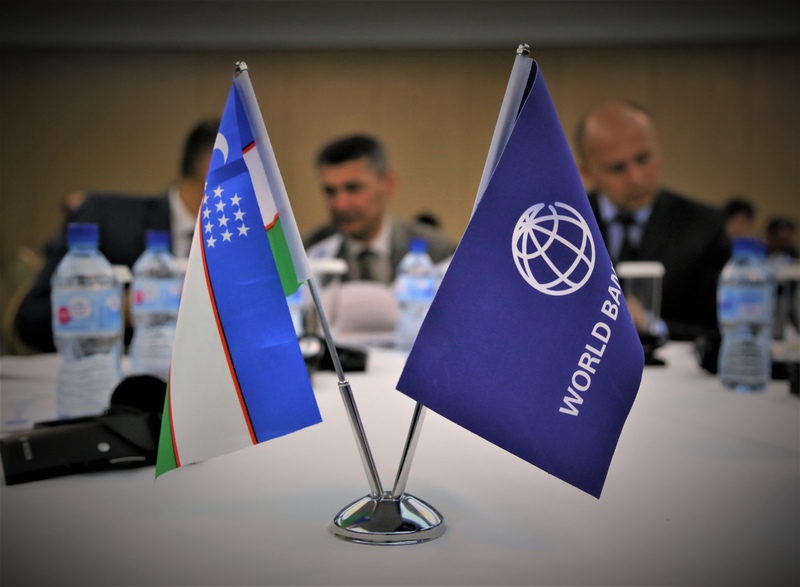
AKIPRESS.COM - The World Bank’s Board of Executive Directors approved the Second Livestock Sector Development Project for Uzbekistan which will help invest in building a productive, competitive, inclusive, and climate resilient livestock sector across the country.
The World Bank will provide technical assistance, international best practices, and financing of $240 million to the Government to implement the Project. The latter will include a highly concessional International Development Association (IDA) credit of $150 million (with a maturity period of 30 years, including a five-year grace period), and a low-cost International Bank for Reconstruction and Development (IBRD) loan of $90 million (with a maturity period of 24.5 years including a grace period of 4.5 years).
Livestock is one of Uzbekistan’s key economic sectors that constitutes 13 percent of GDP and about 50 percent of agricultural GDP. It generates from 45 to 67 percent of rural household income and plays a significant role in ensuring food and nutrition security. The sector employs about 27 percent of agricultural workers. However, it is the source of over 13 percent of the country's total greenhouse gas emissions (GHG) and most of the agricultural emissions.
Livestock production has increased over the last three decades. Nevertheless, productivity remains low compared to that of neighboring countries, such as Russia, Turkey, and Kazakhstan, and it is not meeting the growing domestic demand. It is projected that by 2035, under a business-as-usual scenario, the production of milk and meat will satisfy only 59 and 52 percent of domestic demand, respectively.
Smallholder farmers’ (dehkans) number 4.8 million across Uzbekistan. The productivity of animals they keep is substantially lower compared to that of large-scale commercial farmers and agribusinesses. For instance, average milk productivity is 3 liters of milk per cow per day for dehkans, 8 liters for commercial farmers, and 20 liters for agribusinesses. With improved access to modern inputs, information, technology, and finance, dehkans can increase their productivity.
“The new Project will help the Government implement the 2022-2026 Program for the Development of the Livestock Sector and its Industries in Uzbekistan designed to increase production, productivity, and incomes across the sector; improve access of livestock producers, including dehkans, to market, technology, and finance; develop green, inclusive and climate resilient livestock value chains; and enhance food and nutrition security,” noted Marco Mantovanelli, World Bank Country Manager for Uzbekistan. “Moreover, the Project will contribute to a wider application of the One Health concept in the country focusing on human, animal, and ecosystem health to prevent, detect, respond to, and recover from infectious diseases.”