
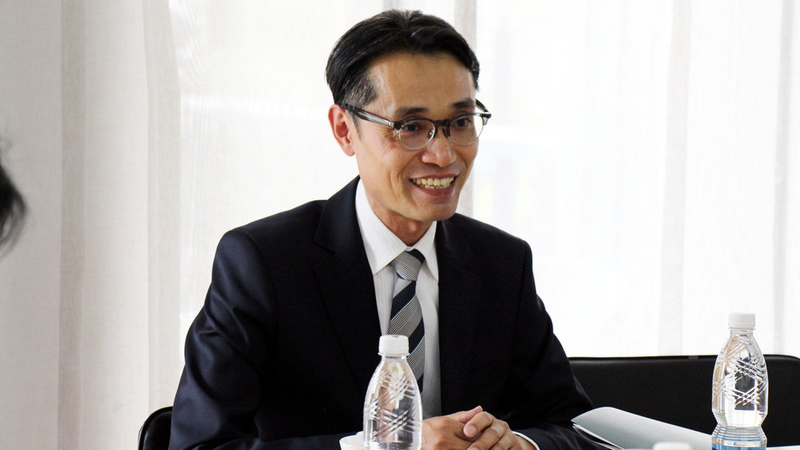
AKIPRESS.COM - Kotaro Nishigata, Chief Representative of the Japan International Cooperation Agency in the Kyrgyz Republic and the Republic of Kazakhstan, in an interview with AKIpress talked about the results of the agency's work and the nearest plans.
- What are JICA’s activities in the Kyrgyz Republic?
- We cooperate under the vision “Leading the world together with trust”. To realize this vision in your country, we are doing our best. Our cooperation is based on two pillars – diversification of industry and job creation, and improvement of governance and social services.
JICA's work in Kyrgyzstan began in 1993. In 2000, we opened an office in Bishkek. This year we are celebrating our 25th anniversary.
In 2000 we also started our volunteer program. In 25 years, more than 300 volunteers (JOCV) were dispatched to the Kyrgyz Republic, who have have contributed their expertise and experience toward supporting local people.
Along with JOCV program there are important activities and projects in infrastructure, agriculture, energy, business, health, governance and others.
- Can you tell us the total amount of aid?
- It is difficult to summarize and give a single figure, because there are different components, different participants, different contributions of experts, by the way the total number of experts exceeds 900 people. Within the framework of technical cooperation, we send experts, provide equipment and train specialists from developing countries - there were more than 2,800 such specialists from Kyrgyzstan.. As of 2023, JICA has implemented technical cooperation worth 23.8 billion yen ($159.7 million at current exchange rates)
We have had grant projects since 2008. These funds are used to improve basic infrastructure and purchase equipment for socio-economic development. Under this line as of 2023, 29.3 billion yen ($198.6 million at the current exchange rate) has been allocated.
- What are the biggest projects?
- The largest projects were implemented under loans used for infrastructure projects. As of 2023, these projects amounted to 37.6 billion yen ($252.3 million at the current exchange rate).
Next are grant projects. These are followed by technical assistance, including people-to-people projects. These are not large in terms of budget, but they are significant in terms of knowledge and information exchange.
- The most famous project is probably “One Village - One Product”.
- I think so. This project is being implemented in the Issyk-Kul region. It started in 2007. Now we have started to spread its experience to other regions of Kyrgyzstan and neighboring countries, such as Tajikistan and Kazakhstan. The model in Kyrgyzstan proved to be successful, and neighboring countries also wanted to implement this project for themselves.
It is important to mention that in 2023, the project received National Project status, recognizing its sustainable results.
- What is Kyrgyzstan's debt to JICA?
- At the end of Japan's fiscal year in 2023, the debt is 22.1 billion yen, about $150 million.
- What are JICA's plans in Kyrgyzstan for the near future?
- We are now working on the 2020-2025 five-year program. We are in the process of putting together a plan for the next five years. In general, the directions will remain the same as I mentioned at the beginning.
We will also be guided by the National Development Program of the Kyrgyz Republic until 2030, we will support production and other priorities specified in this program. Our current cooperation strategy is fully in line with the national development plans.
We will continue to invite experts to contribute developing the country and continue our support to improve the provision of social services, which still need to be strengthened.
Infrastructure projects will be continued to improve transportation links and development.
New challenges have emerged in Kyrgyzstan, such as the effects of climate change, environmental problems, and natural disasters. Now these topics are not part of our two main directions, but I think new challenges need an answer. That is my personal intention. Although we already have projects, for example, to prevent natural disasters on roads.